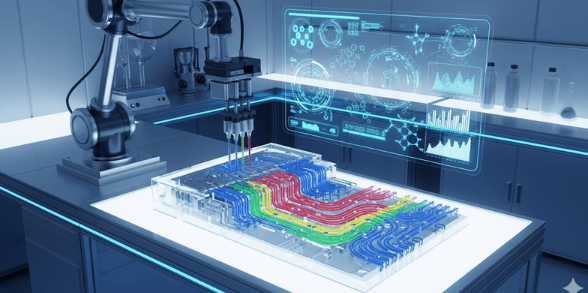
Introduction to Fluorescence Analysis
Fluorescence-based techniques have become essential in modern scientific research, offering precise detection of molecular structures, interactions, and concentrations. By analyzing light emitted from excited molecules, researchers gain valuable insights into biochemical processes, drug interactions, and environmental samples.
At the heart of these techniques is a reliable fluorescence spectrum analyzer. This instrument allows laboratories to obtain accurate, reproducible, and high-resolution data, supporting research, diagnostics, and quality control across multiple industries.
How a Fluorescence Spectrum Analyzer Works
A fluorescence spectrum analyzer works by exposing a sample to light at a specific wavelength, exciting the electrons of molecules within the sample. When these electrons return to their ground state, they emit light at a longer wavelength. The analyzer measures this emitted light, providing a detailed spectrum that reflects the molecular composition and behavior.
Modern fluorescence spectrum analyzers are equipped with high-sensitivity detectors, precision optics, and integrated software, ensuring accurate measurements even at very low concentrations. These features make them suitable for both routine laboratory work and advanced research applications.
Applications in Biochemistry and Molecular Biology
In molecular biology and biochemistry, fluorescence spectrum analyzers are widely used for protein and nucleic acid quantification, enzyme activity studies, and molecular interaction analysis. They allow researchers to detect low-abundance biomolecules, monitor reaction kinetics, and study structural changes with high sensitivity.
A high-quality fluorescence spectrum analyzer ensures reproducible and accurate results, providing laboratories with the data they need to advance research and optimize experimental workflows.
Applications in Pharmaceutical and Clinical Research
Pharmaceutical and clinical laboratories rely on fluorescence spectrum analyzers for drug discovery, biomarker detection, and diagnostic testing. These instruments help monitor drug interactions, evaluate formulation stability, and perform sensitive assays that require precise detection.
Using a fluorescence spectrum analyzer allows laboratories to maintain regulatory compliance, improve workflow efficiency, and generate reliable data critical for patient care and research outcomes.
See also: The Latest Advances in CPAP Machine Technology
Environmental and Industrial Applications
Fluorescence spectrum analyzers are also employed in environmental and industrial laboratories. They assist in detecting trace contaminants in water, soil, and air, as well as in quality control of chemicals and materials.
The sensitivity and accuracy of fluorescence spectrum analyzers make them ideal for diverse analytical tasks, enabling laboratories to perform consistent and reproducible measurements efficiently.
Advantages of Using a Fluorescence Spectrum Analyzer
- High Sensitivity: Detects extremely low concentrations of analytes with precision.
- Non-Destructive: Samples remain intact for further testing.
- Versatile Applications: Suitable for research, pharmaceuticals, clinical diagnostics, and environmental monitoring.
- Reliable Data: Advanced detectors and software ensure consistent and reproducible results.
Technological Advancements
Modern fluorescence spectrum analyzers feature automated sample handling, programmable protocols, digital displays, and integrated data analysis software. Some models include temperature-controlled compartments for sensitive samples, further enhancing precision and reliability.
Investing in a high-quality fluorescence spectrum analyzer ensures long-term reliability, technical support, and calibration services, which are essential for laboratories performing high-precision measurements.
Best Practices for Laboratory Use
To maintain optimal performance, laboratories should follow best practices when using a fluorescence spectrum analyzer Proper sample preparation, routine calibration, adherence to standard operating procedures, and regular maintenance are critical.
Following these guidelines ensures sample integrity, minimizes errors, and extends the lifespan of the instrument, allowing laboratories to consistently produce accurate and reliable results.
Conclusion
A fluorescence spectrum analyzer is an indispensable instrument for modern laboratories engaged in molecular research, pharmaceutical development, clinical diagnostics, and environmental analysis. Its sensitivity, accuracy, and versatility make it essential for obtaining precise and reproducible measurements.
Integrating a high-quality fluorescence spectrum analyzer into laboratory workflows enhances efficiency, ensures reliable data, and supports critical research and quality control applications. For laboratories seeking advanced analytical capabilities, this instrument is a cornerstone of modern scientific practice.