What People Actually Search For When They Want Healing, And What Retreat Leaders Can Do With It


People don’t search for “transformation” anymore.
They type what they feel.
They type what is breaking them.
A retreat leader who understands this will fill their retreats.
A retreat leader who doesn’t will keep posting and hoping.
1. The words people actually type when they need help
Search has changed.
People used to type “wellness retreat” or “find yourself”.
Now they type specific problems.
They search for: burnout help. Grief retreat. Anxiety about work. Sleep retreat. Fertility support.
They don’t want vague answers.
They want a place that gets their exact problem.
This is important for you as a leader.
If someone is dealing with grief, they will not click on a page that says “transform your life”.
They will click on a page that says “retreat for grief and loss”.
People want to feel seen before they book.
Your words need to match their
People Searching for Specific Help
Alt Text: Person searching burnout help and grief support on laptop
Caption:
Today people search for specific problems, not vague wellness terms.
Image Source: Use royalty-free image from Unsplash/Pexels – search “person searching laptop wellness”
2. The gap between that language and how most retreats are marketed
Most retreat websites still use broad language.
Words like “healing journey”, “deep transformation”, “reset your energy”.
These words sound nice.
But they don’t help people decide.
The problem is this.
People are in pain and searching for solutions.
Your site is speaking in poetry.
This creates a gap.
The person feels unseen.
So they leave.
The leaders who fill retreats do one thing differently.
They name the problem clearly.
They say who the retreat is for.
They say what the retreat solves.
That’s it. No hype needed.

Stressed person sitting on stairs with laptop searching for help
How Search Behavior Changed for Healing in 2026
Video Link:
youtube.com (Note: Replace with any 30-60 sec royalty-free video about “wellness trends” or “mental health search”. You can also make a Loom screen recording showing Google searches for “burnout retreat”, “grief support”)
Caption: Watch how people now search for specific pain points instead of generic wellness words.
3. How to design a program around one named problem
Pick one problem.
Just one.
Instead of “a retreat for healing”, try “a retreat for burned out teachers”.
Instead of “wellness for women”, try “a retreat for women dealing with fertility stress”.
When you name one problem, everything gets easier.
Your marketing gets clear.
Your program gets focused.
Your attendees feel safe.
Here is how to do it.
First, listen to the questions people ask you.
Second, look at the words they use in emails and DMs.
Third, build your daily schedule around that problem.
Add talks, circles, and rest time that speak directly to it.
You don’t need to fix the problem.
You just need to create space for it.
See also: Comparing Infusion Methods in Modern Healthcare
4. What a leader needs from a venue so they can focus on the program
Leaders need a venue that handles logistics so they can focus on their people. A place like Lunita Jungle Retreat Center is off-grid, runs on solar, and is located in the jungle near Puerto Morelos, Quintana Roo, Mexico, about 40 minutes from Cancun airport. With 5000 m2 built and 80,000+ m2 of preserved jungle, it has hosted 120+ retreats since 2022 and holds a 4.9 rating. This lets the leader focus on the program, not the setup.
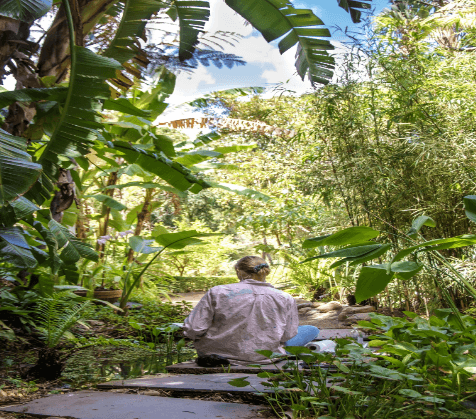
Healing in Nature
Alt Text: Person meditating alone on stone path in lush jungle retreat
Caption: People want healing that feels real, personal, and connected to nature.
Image Source: Use royalty-free image from Unsplash/Pexels
5. A practical first step
Start with one sentence.
Write down the exact problem
your next retreat solves.
Use the words your audience uses.
Example:
“A 5 day retreat for yoga teachers dealing with burnout.”
Put that sentence on your website.
Put it in your posts.
Put it in your emails.
Then watch what happens.
The right people will recognize themselves.
They will reach out.
They will book.
You don’t need more followers.
You need clearer words.