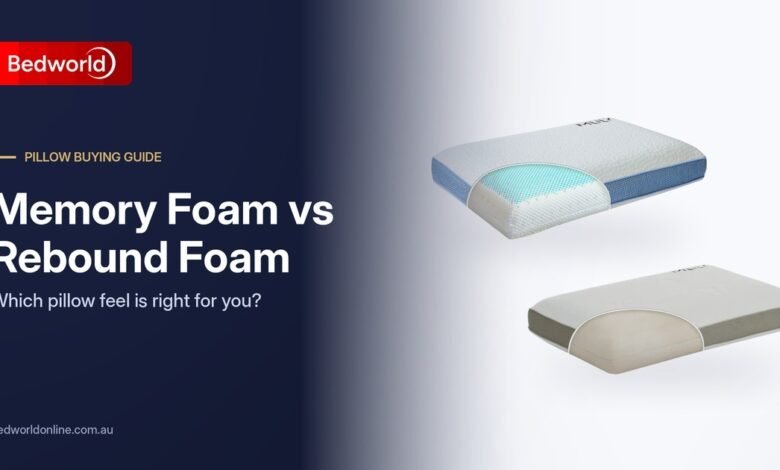
Foam pillows have largely replaced the old polyester-filled pillow that needed plumping every morning. But “foam” covers very different feels. Press your hand into one and it slowly sinks, leaving a print. Press into another and it pushes straight back. If you’re planning to buy pillows in Perth or anywhere else, knowing the difference between memory foam and rebound foam can save you from a pillow that looks right on the shelf but feels wrong at 2 am.
How Memory Foam Works
Memory foam is a viscoelastic foam, originally developed through NASA-funded research in the 1960s. “Viscoelastic” simply means it responds slowly to pressure and heat. As your head rests on it, the foam softens and moulds around the shape of your head and neck, then takes a few seconds to recover once you lift off.
That slow, cradling response is what people love about it. It spreads pressure evenly and holds your head steadily in place. The trade-off is that it can feel like sinking in, and changing position means the foam has to catch up with you.
How Rebound Foam Works
Rebound foam, sometimes sold as responsive, smart or high-resilience foam, is designed to recover its shape almost instantly. It still contours to your head, but it pushes back sooner and more evenly, so you feel supported on top of the pillow rather than settled into it.
The result is a livelier, slightly bouncier feel. It’s easier to turn your head or change position, and the pillow returns to its original shape as soon as you move.
The Key Differences at a Glance
| Feature | Memory foam | Rebound foam |
|---|---|---|
| Feel | Slow sink, cradling | Quick response, supportive |
| Recovery after pressure | A few seconds | Almost instant |
| Changing position | Takes a moment to adjust | Easy and immediate |
| Heat | Can hold warmth unless designed to cool | Usually more breathable |
| Best for | Still sleepers who like to be held | Restless or combination sleepers |
Who Memory Foam Suits
Memory foam tends to work well if you:
- Stay fairly still through the night and like your head held in one place.
- Want pressure relief, for example if a firm pillow leaves your ear or jaw feeling sore.
- Prefer a soft, enveloping feel that blocks out movement from a partner.
It’s often a good match for back sleepers who like a contoured neck shape, and for side sleepers who choose a high enough pillow to fill the gap above the shoulder.
Who Rebound Foam Suits
Rebound foam is usually the better fit if you:
- Change position often, or wake up in a different position from the one you fell asleep in.
- Dislike the sinking feeling of traditional memory foam.
- Sleep warm and want a pillow that doesn’t hold as much heat.
Some brands now build entire ranges around responsive foam. If you’re comparing Mlily pillows in Perth, for example, you’ll find rebound foam models alongside cooling memory foam options, which makes it easy to try both feels side by side.
What About Heat?
Traditional memory foam has a reputation for sleeping warm, because it softens with body heat and has a denser structure. Many modern pillows tackle this with open-cell foam, gel infusions, ventilation channels or breathable covers. Rebound foams are often naturally more breathable, since air moves through them more easily as they flex.
If you sleep hot, look at the whole pillow, not just the foam type. A breathable cover and a ventilated core can matter as much as the material itself.
How to Test the Feel in Store
- Do the hand test. Press firmly for five seconds, then lift. A lasting print means memory foam; a quick bounce-back means rebound foam.
- Lie in your real sleeping position. Spend a few minutes on each pillow, ideally on a mattress similar to your own.
- Turn over. Roll from back to side and notice whether the pillow keeps up with you or lags behind.
- Check the height. The right feel won’t help if the pillow is too high or too low for your shoulders.
Frequently Asked Questions
Is rebound foam firmer than memory foam?
Not necessarily. Both come in soft to firm versions. Rebound foam simply responds faster, which can make it feel more supportive.
Which lasts longer?
It depends more on foam density and quality than on type. Higher-density foams, whether memory or rebound, generally hold their shape longer.
Can I wash a foam pillow?
Usually only the cover is washable. Most foam cores should be spot-cleaned and aired rather than machine-washed, so check the care label.
Do foam pillows smell when new?
Some have a mild smell when first unpacked. Airing the pillow in a ventilated room for a day or two usually clears it.
Conclusion
The choice between memory foam and rebound foam comes down to how you like to feel at night. If you want to sink in and stay put, memory foam’s slow cradle is hard to beat. If you move around, sleep warm or dislike that sinking sensation, rebound foam’s quick response is likely to suit you better. Test both in your real sleeping position, check the height, and choose the feel that lets you forget about your pillow altogether.