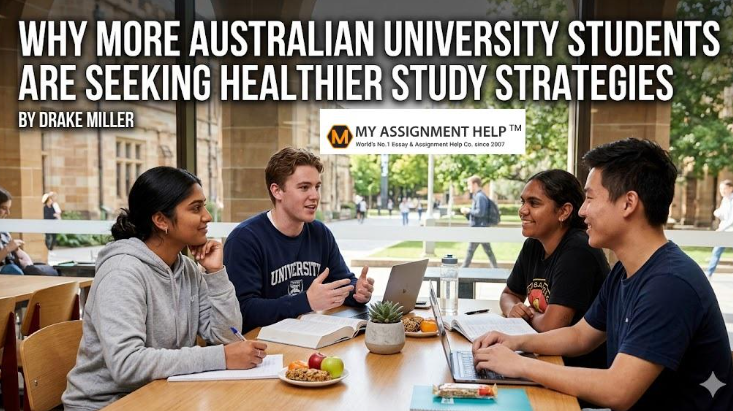
Introduction: The New Paradigm of Academic Success
The modern Australian higher education landscape is undergoing a massive cultural shift. Step onto any tertiary campus—whether it is a bustling TAFE institute in Adelaide, a tech-focused campus in Brisbane, or a historic sandstone university in Sydney—and you will hear a completely different kind of conversation taking place among undergraduate and postgraduate students.
The traditional, bragged-about badge of honour involving sleepless nights, 12-hour energy-drink-fueled cramming sessions, and library desks cluttered with fast-food wrappers is rapidly losing its appeal.
Instead, a new paradigm is emerging. Higher education students across Australia are actively rejecting toxic, high-stress cramming in favour of sustainable, healthy, and scientifically backed methodologies. Today, academic excellence is no longer measured by how much a student suffers, but by how intelligently they manage their cognitive load.
But what is driving this widespread shift? Why are Australian tertiary students suddenly prioritising their mental and physical well-being alongside their Grade Point Averages (GPAs)?
To understand this movement, we must explore the unique, modern pressures facing domestic and international students in Australia, uncover the study strategies for uni students that are redefining academic success, and evaluate how targeted support frameworks are reshaping the learning journey.
1. The Catalysts of the Shift: Why Old University Habits Failed
To understand why healthy study habits are rising across Australian universities, we must first look at why the old ways failed. For decades, the structural recipe for academic excellence was simple: sacrifice everything else for your grades. However, this outdated approach has led to an unprecedented epidemic of student burnout, prompting an urgent search for effective study habits university students can use to preserve their mental well-being.
The Heavy Burden of Tertiary Grading & Progression
University and postgraduate students face increasingly rigid marking criteria, demanding clinical or corporate practicums, and complex research theses that require sustained intellectual endurance. The competition for top-tier graduate positions in premium corporate sectors—such as medicine, corporate law, data science, and engineering—has historically driven young adults to push themselves past their physical and psychological breaking points. When students believe their entire career trajectory hinges on maintaining a flawless GPA, chronic anxiety unfortunately becomes the baseline.
For students navigating intensely technical disciplines, specialized guidance like zoology assignment help can mean the difference between clinical academic burnout and sustainable, high-tier performance.
The Cost-of-Living and the Work-Study Balancing Act
Unlike previous generations, modern Australian tertiary students rarely have the luxury of focusing solely on their textbooks. With rising rent prices in major capital hubs like Sydney, Melbourne, and Brisbane, alongside skyrocketing grocery bills, a vast majority of students are forced into a difficult balancing act.
[Full-Time Course Load: ~40 Hours] + [Part-Time Work: ~20 Hours] + [Commuting/Life: ~15 Hours] = 75 Hours/Week
Balancing full-time or part-time work with full-time course loads has become the standard baseline for survival. Trying to apply old-school, time-consuming study methods to a schedule that already includes 20 hours of retail or hospitality work per week is a mathematical recipe for physical and mental collapse. Students simply do not have the time to study inefficiently anymore. They need optimized systems that deliver results in half the time.
Increased Regional Awareness of Mental Health
Australia has firmly established itself as a global leader in destigmatising mental health challenges among youth and young adults. Pioneering regional organisations like Headspace and Beyond Blue have spent years educating university-aged demographics on how to spot the early warning signs of clinical anxiety, depression, and chronic stress.
As a direct result, today’s university students are highly literate in mental health. They recognize that a top-tier grade is fundamentally not worth sacrificing their psychological well-being. This widespread cultural realization has led them to look for alternative, sustainable paths to academic success, turning away from panic-driven cramming and toward how to balance uni and work effectively.
See also: CPAP Machine Technology
2. Core Pillars of Effective Study Strategies for Uni Students
When we talk about healthier study strategies, we are not just talking about taking more frequent breaks or drinking more water. We are talking about a systemic, cognitive re-engineering of how information is processed, retained, and applied without overtaxing the human brain.
Australian university students are increasingly turning away from passive learning—such as re-reading highlighted textbooks or mindlessly copying lecture slides—and adopting high-efficiency, active methodologies instead.
Active Recall and Spaced Repetition
Instead of spending six continuous hours reading an entire digital textbook the night before a major final exam, savvy students are breaking their unit syllabus down weeks in advance. By using Active Recall—a method where students force their brains to retrieve information without looking at their notes—they build much stronger neural pathways.
When paired with Spaced Repetition (reviewing the material at expanding time intervals), they log complex academic information into their long-term memory with a fraction of the cognitive fatigue. This deliberate pacing ensures that when final examinations or major essay deadlines approach, their stress levels remain low because the knowledge is already deeply consolidated.
The Pomodoro Technique and Cognitive Pacing
The human brain is an organic organ, not a digital machine; it is not built to maintain deep focus for five consecutive hours. Australian university students are widely adopting pacing methods like the Pomodoro Technique—working in highly focused 25-minute blocks followed by a mandatory 5-minute break.
During these short breaks, moving away from screens allows the brain’s default mode network to reset. This practice prevents mental exhaustion, maintains high neuroplasticity, and keeps boredom at bay, allowing a student to accomplish more in two hours of focused work than in five hours of distracted, fatigued studying.
Embracing Academic Delegation and Support Networks
One of the healthiest realisations a modern student can have is that they do not have to carry the heavy academic burden entirely alone. Seeking external academic support is no longer viewed as a sign of weakness or academic inadequacy; rather, it is recognized as an act of smart, strategic time management.
When multiple complex assignments stack up simultaneously across different units during the mid-semester peak, savvy students are relying on trusted professional academic resources to balance the load. Myassignmenthelp allows students to break down complex assignment briefs, master difficult referencing styles (such as APA 7th, AGLC, or Harvard), and secure comprehensive tutoring assistance.
By outsourcing the overwhelming mechanics of research structuring and formatting, students can free up valuable mental bandwidth. This allows them to focus heavily on understanding core concepts, working their jobs, and maintaining their mental health without falling behind in their degrees.
3. Redefining the Tertiary Study Environment
The physical and digital space where a student works plays a massive role in their anxiety levels, focus retention, and overall productivity. The modern university student is highly conscious of ergonomics, digital wellness, and environmental psychology.
To see how drastically student habits are changing across the country, consider the structural shift between traditional, unoptimized study setups and modern, health-conscious configurations:
| Attribute | Traditional High-Stress Environment | Modern Healthy Environment |
| Workspace Setup | Hunched over a laptop in bed or a cramped, cluttered desk | Ergonomic setup, standing desks, or open-plan library spaces |
| Digital Environment | Constant interruptions from smartphone and social media alerts | Intentional use of app blockers to build deep focus |
| Pacing & Breaks | 5+ hour continuous marathons leading to cognitive fragmentation | Structured blocks (e.g., Pomodoro Technique) with active rest |
| Mental State | High anxiety, sleep deprivation, and reliance on stimulants | Sustained focus, protected sleep cycles, and steady energy levels |
Digital Detoxes and Focused Workspaces
With the addictive rise of short-form video platforms and continuous smartphone notifications, cognitive fragmentation is a major threat to student success. Healthier strategies involve the intentional use of app blockers (like Freedom or Forest) to create distraction-free environments. By removing the constant dopamine hit of notifications, university students find they can complete their research tasks with deep, uninterrupted focus, protecting their minds from digital fatigue.
Ergonomics and Changing Scenery
Sitting hunched over a laptop on a soft bed or a low coffee table leads directly to chronic neck pain, tension headaches, and physical fatigue. More tertiary students are actively investing in proper ergonomic setups, utilising standing desks, or taking advantage of the bright, open-plan architectural spaces found in modern Australian university libraries. Furthermore, changing environments—such as studying at a quiet local cafe or a community library—keeps the brain alert, engaged, and receptive to new information.
4. The Physical Dimensions of Academic Success
A healthy mind quite literally cannot exist without a supported body. The holistic approach to studying now being adopted across Australia recognizes that nutrition, sleep quality, and physical movement do not just support health—they act as direct cognitive enhancers.
Sleep as a Non-Negotiable Cognitive Tool
For years, staying up until 4:00 AM to finish an essay or pulling an all-nighter before a major exam was viewed as standard, normalized student behaviour on campus. However, modern neuroscience has thoroughly debunked the utility of this practice, proving that sleep deprivation actively hinders the brain’s ability to retain information.
During deep sleep cycles, the brain flushes out metabolic waste and consolidates what was learned during the day into long-term storage. Knowing how to protect your mental health effectively means prioritizing 7 to 8 hours of sleep as a crucial, non-negotiable component of an exam preparation strategy.
Brain Food over Fast Food
The old university culture of surviving on instant noodles, ultra-processed fast food, and highly caffeinated energy drinks during intense exam blocks is steadily being replaced by clean, mindful eating habits.
Diets rich in Omega-3 fatty acids (like avocados, walnuts, and salmon), complex carbohydrates (like native Australian oats), and leafy greens provide a steady, reliable release of glucose to the brain. This prevents the sudden, sharp energy crashes associated with sugary snacks and high-stimulant drinks, allowing for sustained, calm focus over long study sessions.
5. The Long-Term Benefits: Beyond the Report Card
The widespread adoption of healthier study strategies does not just result in better marks on an assignment sheet; it fundamentally shapes the future of the entire Australian workforce.
Prevention of Academic Burnout
When a student experiences severe burnout during their first or second year of higher education, it can completely derail their entire career path. They may drop out of courses they love, lose their intrinsic motivation, or develop chronic, long-term anxiety disorders. By learning how to avoid student burnout at the university level early on, students build a sustainable, joyful, and productive relationship with learning that lasts a lifetime.
Seamless Transition into the Corporate World
The professional and corporate landscape in Australia—whether in Sydney’s fast-paced financial hub, Melbourne’s creative sectors, or Brisbane’s growing tech ecosystem—increasingly values emotional intelligence, work-life balance, and sustainable productivity.
Students who master the art of time management, learn to set firm boundaries, and understand how to leverage academic support networks Australia offers transition into the competitive workplace as highly efficient, resilient, and grounded professionals. They enter their careers already knowing how to deliver exceptional results without sacrificing their personal health.
Frequently Asked Questions
Q.1 What are the most effective study strategies for university students juggling work?
The most effective approach is to focus on micro-productivity frameworks like the Pomodoro Technique (25 minutes of focus followed by a 5-minute break). When balancing full-time study and work in Australia, students should also lean into academic delegation—utilising professional, trusted support resources like My Assignment Services to assist with research structures, referencing styles, and time management.
Q.2 How does sleep deprivation affect academic performance during exams?
Neuroscience shows that sleep deprivation actively limits the brain’s ability to retain and recall information. Deep sleep cycles are necessary for the brain to consolidate daytime learning into long-term memory. Prioritizing 7 to 8 hours of sleep consistently outranks all-night study sessions in producing superior academic marks.
Q.3 Why are active study habits better than passive learning?
Passive learning, such as re-reading text or highlighting pages, creates an illusion of competence without actually embedding information. Active study methods, such as testing oneself through flashcards or explaining concepts aloud, force the brain to actively retrieve data, building much stronger and more permanent neural connections.
Conclusion: A Smarter, Healthier Future for Australian Education
The ongoing evolution of study strategies among Australian tertiary students proves that achieving academic excellence does not require the toxic sacrifice of personal well-being. By stepping away from the counterproductive cycles of cramming, sleep deprivation, and isolation, and moving toward active recall, healthy physical habits, and structured academic support networks, young Australians are successfully rewriting the rules of modern education.
True academic success is no longer measured solely by the final grade at the bottom of a page, but by the health, clarity, and long-term resilience of the mind that achieved it. If you are currently feeling buried under an avalanche of upcoming university deadlines, take a step back. Re-evaluate your schedule, protect your sleep at all costs, reach out for reliable assignment help when you need to balance the load, and always remember that studying smart will always triumph over studying stressed.
About the Author – Drake Miller
I work as a dedicated academic content writer at Myassignment.services, creating informative and student-focused content for learners from various academic backgrounds. My expertise includes assignment help, study planning, research methods and effective learning strategies. Through clear, engaging, and practical articles, I aim to help students improve their academic skills, manage their coursework efficiently, and overcome educational challenges with greater confidence and success.